Now welcoming new clients in Melbourne & Nationally via Telehealth  ·  Book a free call →

Make the most of the online disability community

[4 minutes read]

A few of my clients recently tolds me about the negative experiences they had with other disabled people, mostly online. The online space is filled with wonderful things and people, but it is also, just like our real world, filled with ableism, trauma and internalised ableism.

My personal experience with the disability community has been dotted with wonderful moments of joy, acceptance, understanding, camaraderie, validation, and bonding, while sprinkled with the exposure to internalised ableism, trauma dumping, inspiration porn, anger, and even bullying.

It took me a few years to learn how to manage the complexity of the online disability space. I am still learning of course, especially within the rapidly changing online world, yet the following tips can be useful as a guide for any online space you are in or considering joining.

Spot the ableism – before or upon joining an online space or group, spend some time observing the content others are creating or sharing. Ableism without warning, or internalised ableism that goes unacknowledged, are red flags. For instance, I recommend staying away from a group filled with people sharing their grief about their children being disabled.

Search for balance – online (just like physical) spaces for disabled people should have some balance between the hard stuff like discrimination with the beautiful stuff like disabled pride or joy.

Check who has created and manages the space – online spaces created by and for disabled people are more likely to be useful for fellow disabled people. They are more likely to be balanced, and add value to your disabled life.

Set yourself some guiding principles – to manage the ableism you inevitably will come across. For instance, avoid looking at particular groups after dark, to make sure you don’t get intense emotional responses before bedtime. Other principles you can consider are calling out ableism only when you have available support through the day to debrief.

Know when to leave – give yourself permission to leave a space at any time if it stops being useful for your wellbeing. There is nothing wrong with unfollowing someone or leaving a group that makes you feel worse or is contributing to your internalised ableism for instance. It is useful to think about the big picture. If you leave most spaces, it may be useful to search for an alternative to make sure you stay connected and well.

The online space has given so many of us the ability to connect with fellow disabled people, to learn about ableism, find our voice, form friendships and nurture our special interests.

If you are looking for a safe and nurturing space to connect with other disabled people, check out our groups here and register your interest to join the next one.

You deserve to feel safe and connected, no matter where you are.

Liel Bridgford

Psychologist, Writer, Educator

Kultivate Founder & Director

From Shame to Pride

By Liel Bridgford [4 minutes read]

As a kid all I ever wanted to be seen as was ‘normal’. I carefully chose my clothes to hide my leg, I would always tuck my leg under or behind me. I was keenly and constantly aware of other people’s gaze. At the slightest hint that someone was looking towards my leg or staring at the way I walked, I would avert my own gaze, trying to bury my shame.

More than three decades into living in a disabled body, I have now been proudly selected as an honoree for Diversability’s D-30 Disability Impact list! This feels like the perfect celebration of Disability Pride Month. 

D-30 Disability Impact List Honoree - Liel Bridgford, Kultivate Founder and Director
D-30 Disability Impact List Honoree – Liel Bridgford, Kultivate Founder and Director

Today I am prouder than ever to call myself a disabled person who looks straight into people’s eyes if they stare, talk about disabilities openly and dress to express my personality, uneven legs, feet and all. 

Getting to this point was not easy, nor automatic. I was not raised with disability pride, nor did I come to know about it until well into adulthood. Grief, anger, sadness and frustrations were and still are a part of my life. Living in this world, particularly as a disabled person, is hard. What I have learnt over the years though, is how to live the most meaningful life I possibly can. 

The disability community has taught me about acceptance. I do not accept things that we should and can change like inaccessibility, abuse, or neglect of disabled people. 

But I now accept and do not fight with the fact that I was born different. That my leg has a few bones ‘missing’, that my ankle has zero movement, or that I will likely need orthopaedic, custom-made shoes for the rest of my life. I embrace these facts by practising disability acceptance daily. For me, this means wearing shorts that reveal my legs, using my walking stick, telling randoms at the playground that I am disabled, and more. 

By the way, we have recently created an FAQ page to answer your most common questions about disability, mental health and more. Disability acceptance is a common theme so check out the new videos HERE to learn more. 


I now have dedicated my life’s mission to improving the lives of disabled people. This International recognition of The D-30 Disability Impact List for disabled leaders feels like a huge log onto my motivational fire to make disabled lives better. I plan to continue working tirelessly to improve disabled lives, and hope to leave this world more equitable, accessible, safe and wonderful, especially for multiply marginalised disabled people. 

The D-30 list this year is filled with determined, creative, courageous and passionate people including Chloé Hayden and Sonny Jane Wise who I am a huge fan of. 

Thank you to those who nominated me, and everyone supporting me, my work and the disability community at large. 

Little Liel would not have believed that as an adult I’ll be so loud & proud about being disabled, and be fortunate enough to support other disabled folks daily. 

To learn more about the list and read about the other honorees visit: https://mydiversability.com/2023-d30-honorees

Happy Disability Pride Month! 

Liel Bridgford 

Psychologist, Writer, Educator 

Kultivate Founder and Director

International Day of People With Disability

By Liel Bridgford [4 min read]

On December 3rd 2024 I spoke in front of an awaiting audience my favourite topic – mental health of people with disability. It was the perfect way to celebrate International Day of People With Disability. 

This was my first Key Note speech and the welcome I received from the hosts at St John of God Accord was phenomenal. 

Here is a summary of my speech: 

“I was an angry child. I was in my late twenties when I finally made the connection between being an unheard disabled kid and my persistent anger. 

We get told by the society we live in, that we cannot possibly be well if we’re disabled.

But disabled people experience discrimination in our daily life and this of course impacts our quality of life and mental health.

Mental ill health is not our destiny. We often have poorer mental health because we live in a world that isn’t built for us. 

The question that needs answering is not how can we live well with disability but how can we live well in an ableist world? 


If we want to improve the lives and mental wellbeing of disabled people we need to change the world. 

By the world I mean the society we live in, to become equitable and safe for every body and every mind. 


But, while we are working towards changing the world, we also need individual support – so that we each live well in a world that isn’t built for us.

So how do we thrive with our mental wellbeing in this world? There are three pillars I’m suggesting we focus on. 

The first pillar is formal support. 

This support can include health, community and other professionals, and it needs to focus on removing barriers to participate equitably in society and thrive. 

The support should aim to increase our quality of life – not focussing solely on our limitations, but consider our personal goals, dreams, aspirations and our strengths. 

The second pillar of living well and improving our mental health as disabled people is social connections. 

Finding our people can be hard. Sometimes even being around others is difficult, and the spaces people spend time in are often inaccessible. 

When I was growing up, I did have friends. But there was so much all my friends did that I couldn’t do. And it left me feeling like an outsider.

I believe that we need social connections both within and outside the disability community. When we pretend like we don’t belong to the disability community, we are feeding into our internalised stigma. We also miss out on opportunities to learn, to laugh, to heal. 

I often hear in my practice: ‘People don’t get it’.

This is where the third pillar for mental wellbeing comes in – engage better. 

This pillar helps us build and sustain the first two pillars and our mental wellbeing overall. Engaging better is about improving our skills that lift our wellbeing.

I’m going to tell you about the skills I believe are most important, which is why I called them the building blocks of the third pillar. 

Asking for help is the first building block of engaging better.

As disabled people, we need to ask for help so much more because we live in a society that doesn’t automatically accommodate our needs.

The second building block of engaging better is communication.Not only we may struggle with communication because of our disability experience, but as disabled people we need to have better communication skills than non-disabled people. 

Our third building block for engaging better is acceptance. It’s about learning how to be uncomfortable, and at the same time, be ok.

The fourth building block is managing disability tax. We need to manage and address disability tax to make sure we minimise it as much as possible, manage our time the best we can, and get the supports we need to ensure we still have space for meaning and purpose.

The fifth building block of engaging better, which is my favourite, is meaning and purpose. To optimise our mental health we want to experience joy, self confidence and positive emotions. [2] We need to do things that matter to us, to behave in a way that makes us feel proud. 

The next building block in the engage better pillar is self compassion. To best live through all of these external and internal challenges, and look after our mental wellbeing, we need self-compassion.

The final building block we need to mention, and I’m going to put it at the very bottom of the pillar, because without it, we can really struggle with all of those skills. 

A crucial building block in engaging better to improve our mental wellbeing, is understanding and managing our internalised ableism. 

Internalised ableism is the common denominator that gets in our way to practice all of these! Without managing this, you can see how the pillar kind of falls down. 

Internalised ableism is the collection of the thoughts, feelings, and behaviours that are rooted in the discrimination and prejudice against disabled people.


When we learn to recognise, name, and manage our own unique collection, it makes it possible to be more compassionate towards ourselves, more accepting, to find meaning and overall engage better. “

There was more to this speech, which if you’re interested you can listen and watch here

What I particularly enjoyed was connecting with fellow disabled people and the people who support them. 

Thank you again to St John of God Accord for having me, and to Nillumbik Shire Council for the grant making this event possible. 

Until the next IDPWD, let’s all find small moments of celebrating disability pride. 

Liel Bridgford

Psychologist, Writer, Educator 

Kultivate Founder and Director

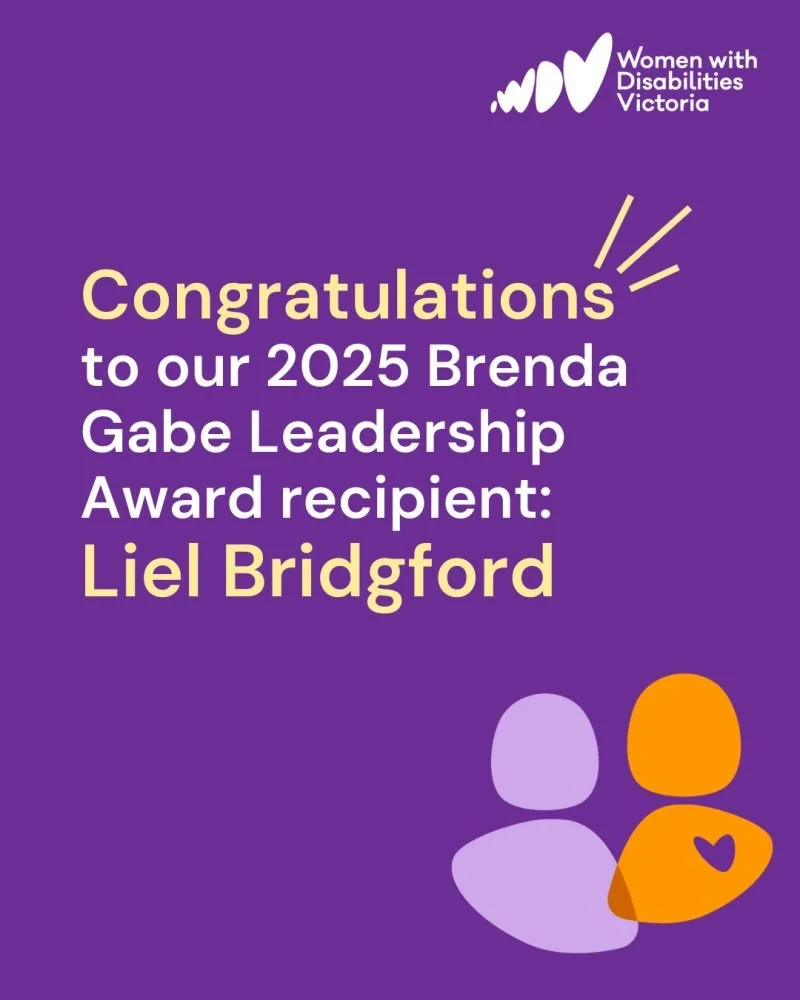
2025 Brenda Gabe Leadership Award

By Liel Bridgford [2 minutes read]

“When I was a kid, my time in the health system was filled with trauma. 

My mission is to change the way we do healthcare – so that disabled people have the power and access they deserve and need to have the best healthcare and life.”

This was the start of my acceptance speech of the Brenda Gabe Leadership Award on Tuesday 27 May 2025.

WDV said “Liel has been improving the lives of women and gender diverse people with disability as a proud disabled psychologist, and by establishing a disability-specific psychological practice. Liel continues to improve access and acceptance of disabled women in mental healthcare through advocacy, education, writing, podcasting, interviews and social media presence.”

I continued, speaking to the crowd of the Members event of Women with Disabilities Victoria (WDV):

“This award is a proof that we can do it.

There are still many barriers, violence and even abuse of disabled women and gender diverse people in our healthcare system and I aim to be a small part of the wave of change to make the healthcare system safe and accessible for all. 

Being here today reminds me of the power of our community to make sure disabled girls, women and gender diverse people are not left behind.  

Thank you to WDV and the disability community that I am so proud to be a part of. I feel so honoured and privileged to have this opportunity. 

I want to acknowledge my fellow nominees, all of whom do incredible work to make our lives better.”

My commitment to re-creating the healthcare system has started when I was a kid, and winning this award fills me with hopes, and fuels my dream of a safer, more accessible future for us all.

Liel Bridgford

Psychologist | Writer | Educator

Kultivate Founder & Director
Knowledge is Power

By Liel Bridgford [2 min read]

It took me nearly 30 years to find out that an Occupational Therapist is a profession that could be relevant to my life. Not only they can be relevant, but they can help improve my access to things and people I love, and even improve my quality of life.

Lack of collaboration between professionals, and the knowledge gatekeeping from clients is still a significant problem in the health system. That’s why at Kultivate I am determined to create something different. A practice, and a system where information is shared, where clients are the experts, and are given all the information and knowledge they need to thrive.

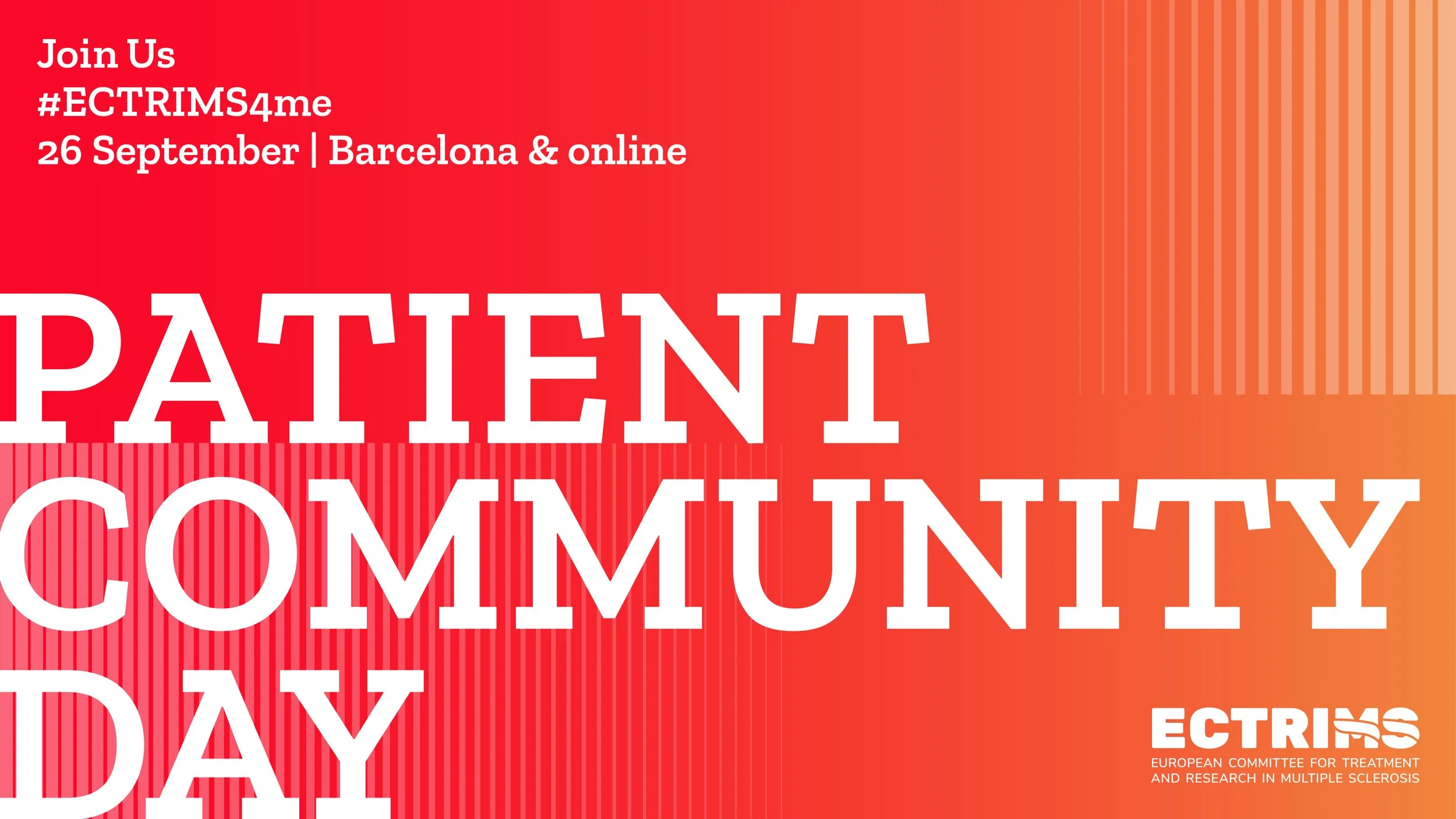
That is why we decided to support the 2025 ECTRIMS patient community day – to help more people with neurological conditions receive the information and support they need.

The event is happening on 26 September 2025 in Barcelona & online and is designed to bring the latest research about Multiple Sclerosis and related conditions to people living with them.

To register, visit: https://www.ectrimspatientcommunity.eu/registration

As we get closer to the date, we are thinking more about how to support the community and are hoping to host an event to watch and connect.

Would you want to get together to watch and connect with the community? In person in Melbourne or online? Let us know by emailing contact@kultivate.au.

a red and oragne tile with text reading 'join us #ECTRIMS4me 26 September, Barcelona &online. Ask the expert - patient community day. Ask the expert.ECTRIMS: European Committee for Treatment and Research in Multiple Sclerosis.
[ID: a red and oragne tile with text reading ‘join us #ECTRIMS4me 26 September, Barcelona &online. Ask the expert – patient community day. Ask the expert. ECTRIMS: European Committee for Treatment and Research in Multiple Sclerosis. ]


We are excited and proud to provide a little support to this fantastic event, created for clients with the sole aim of improving people’s lives.

Having knowledge gives us power – to make more informed decisions, to speak up, to access our community. A simple suggestion from my first Occupational Therapist to get a stool meant significantly less lifting and bending, less pain and even less fatigue.

No one should wait 30 years to receive the support that they need to thrive.

If anything that we learn in our journeys as professionals can help any other person, we want to share it. In fact, here at Kultivate we believe that education and collaboration is a crucial part of providing excellent support.

If there is something you want or need to know, or if the support you currently have isn’t working — know that things can improve. Learning from others, both professionals and peers, can be one of the ways to create the change you are after.

Liel Bridgford

Psychologist | Writer | Educator

Kultivate Founder & Director
Acknowledgement of Country

The Kultivate team acknowledges working and living on unceded Aboriginal land. We mainly work on the lands of the Wurundjeri Woi Wurrung and Boonwurrung people of the Kulin nation. We pay our respect to Aboriginal and Torres Strait Islander elders — past, present and emerging. We are committed to ongoing learning and working towards reconciliation and justice.